
Choosing a Clay Body
How earthenware, stoneware, and porcelain differ, and which is most forgiving for a first home project.
Read article →Plain notes on choosing a clay body, shaping by hand or on the wheel, and drying and finishing small pieces in a Canadian home studio where space, humidity, and kiln access are real constraints.
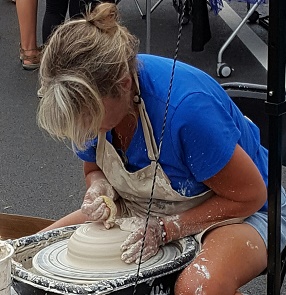
Most home pottery problems trace back to one of three stages. Each section keeps to specifics: water content, wall thickness, drying time, and the choices a hobby maker actually controls.
Earthenware, stoneware, and porcelain behave differently in the hand and in the kiln. Picking a forgiving body matters more than any single technique when you are starting out.
Pinch, coil, slab, and wheel work each suit different forms. The common thread is even wall thickness and not fighting the moisture level of the clay.
Cracks are usually a drying problem, not a shaping one. Even, unhurried drying and careful greenware handling decide whether a piece survives to the kiln.
How earthenware, stoneware, and porcelain differ, and which is most forgiving for a first home project.
Read article →
Pinch, coil, slab, and basic wheel throwing — what each method is good for and where beginners go wrong.
Read article →
Greenware stages, even drying to avoid cracks, trimming, and what surface options exist before a kiln firing.
Read article →Winter heating in much of Canada drops indoor humidity sharply, which speeds drying and raises crack risk. In summer, humid stretches in regions near the Great Lakes or the coasts slow drying instead. Neither is a problem on its own — but assuming a fixed drying time from a textbook written for another climate often is.
Kiln access is the other practical limit. Many home makers do not own a kiln and instead fire through a community studio, a college continuing-education program, or a shared cooperative. Public institutions such as the Gardiner Museum in Toronto and the Canadian Clay & Glass Gallery in Waterloo run classes and exhibitions that are a useful starting point for finding local firing options.
Practical detail. If you bisque-fire through a shared studio, ask early what clay bodies they accept and what cone they fire to. Matching your clay and glaze to the studio's firing schedule avoids wasted greenware.
If something here is unclear or you have spotted an error, send a note. This form runs entirely in your browser and does not transmit data anywhere.